Team Toolbox
Build & Program
CAD Files & Design


Finances/Fundraising
Team Management
Rookie Teams
Active Utah Teams
Team Number | Team Name | City | Rookie Year | Team Website |
|---|---|---|---|---|
3747 | The Hive | Sandy | 2009 | |
5667 | Robominers | Park City | 2011 | |
8400 | Perfect Paradox | Cedar City | 2014 | |
8641 | The Masters | Pleasant Grove | 2014 | |
10533 | OHMS Velocity Raptors | Riverton | 2015 | |
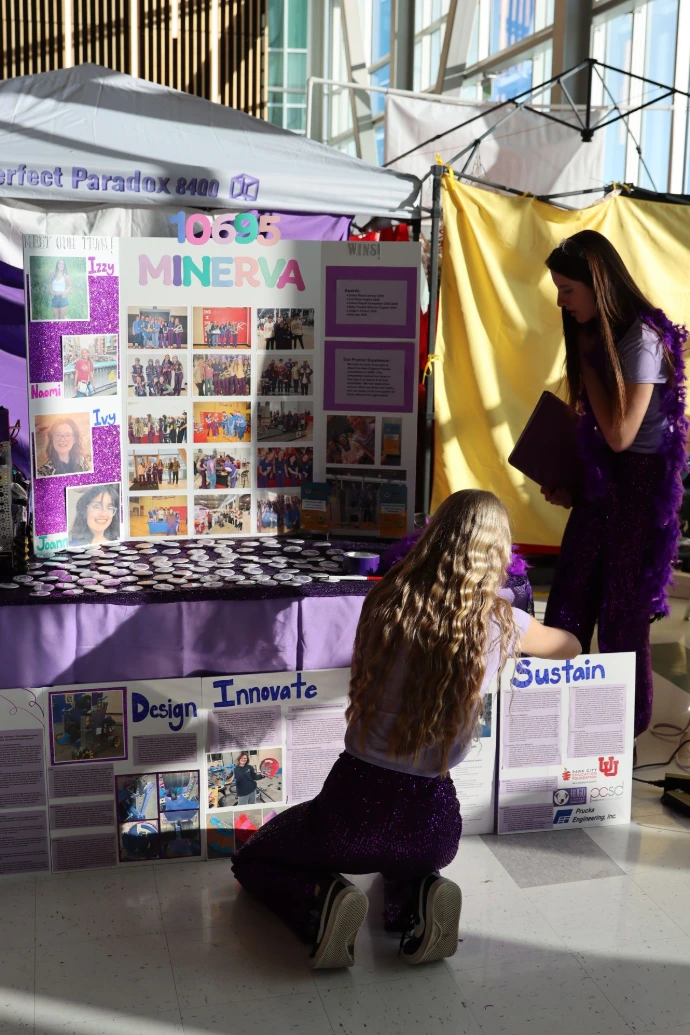
10695 | Minerva | Park City | 2015 | |
11002 | Die Toaster, Die! | Midvale | 2015 | |
15413 | Toaster Medics | Midvale | 2018 | |
15749 | OHMS Baconators | Riverton | 2018 | |
16028 | Mecha Knights | Provo | 2018 | |
16927 | Brighton Robotics | Salt Lake City | 2019 | |
17230 | Aluminum Falcons | Sandy | 2019 | |
17603 | Nuclear Core | Castle Dale | 2019 | |
17604 | TNT (Terribly Nice Team) | Castle Dale | 2019 | |
19389 | Angry Aliens | Ogden | 2021 | |
19922 | Iron Lions | Salt Lake City | 2021 | |
20515 | Cubed ETs | Taylorsville | 2021 | |
21676 | Gelatinous Cubed | Salt Lake City | 2022 | |
21881 | Skynet | Provo | 2022 | |
21895 | Töster Strüüüüüdel | Midvale | 2022 | |
24087 | IRS (Infinite Robot Synergy) | Lehi | 2023 | |
24703 | Celestial Robotics | Salt Lake City | 2023 | |
25678 | Disconnect | Salt Lake City | 2024 | |
25976 | Techno Knights | Provo | 2024 | |
26482 | A$AP | South Jordan | 2024 | |
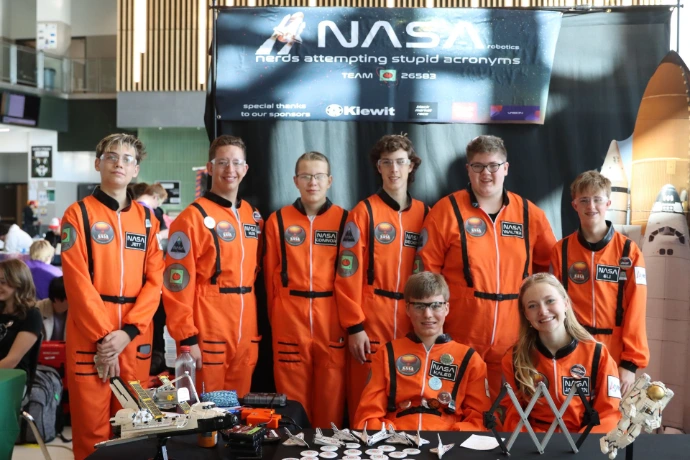
26583 | NASA - Nerds Attempting Stupid Acronyms | Saint George | 2024 | |
26630 | Chaos2 | West Jordan | 2024 | |
28285 | Buy-N-Large | Orem | 2024 | |
30534 | Odyssey Rovers | Herriman | 2025 | |
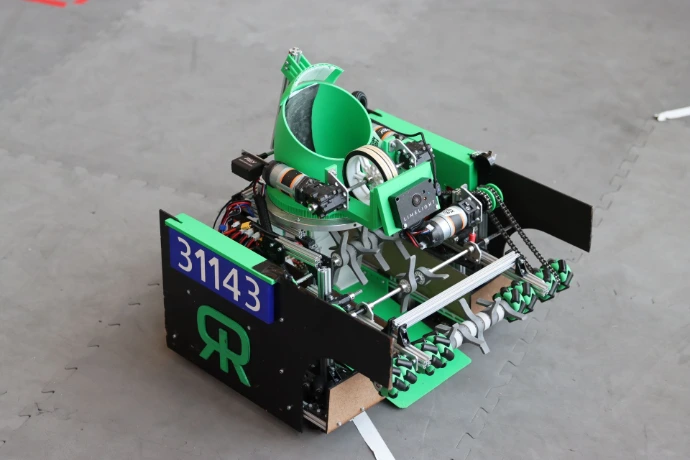
31143 | Rogue Robotics | Pleasant Grove | 2025 | |
31683 | Euclid's Engineers | Lindon | 2025 | |
31834 | Unhatched Plans | Sandy | 2025 | |
31835 | Ctrl-Bee | Sandy | 2025 | |
31909 | Valkyries | Provo | 2025 | |
32068 | MajesTech | Riverton | 2025 | |
32069 | Jurassic Toast | Midvale | 2025 | |
32070 | Hunka Hunka Burnin' Toast | Midvale | 2025 | |
32071 | Toastbusters | Midvale | 2025 | |
32072 | Pacific Toast Highway | Midvale | 2025 | |
32272 | Eagle Works | Salt Lake City | 2025 | |
32844 | Category 5 | Hurricane | 2025 | |
33441 | Gravediggers | Sandy | 2025 | |
33748 | Shadow Hawks | Sandy | 2025 | |
34028 | Titans Robotics | Holladay | 2025 | |
36490 | Wired Different | Salt Lake City | 2026 | |
36534 | Jackalope Robotics | Saint George | 2026 | |
36546 | Koalafied | Taylorsville | 2026 | |
36711 | Psybots | Cedar City | 2026 | |
36822 | Banana Bots | Sandy | 2026 | |
37160 | Tech Ninjas | Sandy | 2026 | |
37258 | Rowland Hall Middle School FTC | Salt Lake City | 2026 |
Frequently Asked Questions
FTC Utah 2025 Judging FAQs
Yes, those can be found in several places:
The Mentor Manual under pages 39-41.
The Competition Manual under Section 6.
The Judge & Judge Advisor Manuals.
No. More than one team often advances from the same room.
No. Teams will still be evaluated during the following times:
- The 10-minute period after the interview has concluded and the teams have left
- Initial deliberations
- Pit Interviews
- Game Play
- Final Deliberations
No. Teams will still get the opportunity to interview for an award after they have returned to their pit. Judges will make an effort to interview all teams in the pits.
If the allotted pit interview time is drawing to a close, judges may talk to teams in the game queue. Please talk to the judges if they approach you in the queue, or take them to the members who can answer their questions. Judges cannot extend pit interview time because they have to have decisions and scripts in the system by the time alliance selection ends.
Not at official qualifiers or events. Teams mentioned having written feedback in the past, which is true. However, in previous seasons, the written feedback was limited by FIRST to the quality of the presentation, not on the content. While the feedback forms this season comment on content, judges are still restricted from giving written feedback.
These are the rules FIRST has laid out, not Utah's. If we deviate too far from them, our qualifiers and championship events can be nullified by FIRST. If that happens, we could lose our advancement tickets.
Scrimmages, build days, and similar non-advancing events may choose to provide written feedback. That is up to the event host.
We have been made aware of incomplete feedback forms and are requesting FIRST make updates to the feedback forms to stop this from happening. Specifically, we asked them to add a function that prohibits incomplete forms from being submitted.
FTC Utah 2025 Gracious Professionalism FAQs
Gracious Professionalism is still the heart of the competition. Here is the basic information:
- If there are issues with Gracious Professionalism off the field, the coach will be made aware of the issue to relay to their team.
- If there are issues on the field, the Head Referee will make the students aware of the problem. It will go to the coach if the behavior continues, and may result in penalties or a yellow/red card.
- Any issues will be kept between the team, coach, and volunteer. With the exception of yellow/red cards, infractions will not be announced to the teams or general public.
Here are ways to go about reporting Gracious Professionalism issues during an event.
Volunteers
- Go to your lead volunteer and they will report to the event host
Team Member
- Go to the question box and speak with the Head Referee
Coach
- Send a team member to the question box. Another team member, coach, or mentor can accompany the team member. The Head Referee is only allowed to talk to the one person in the question box.
- If you would like to not go through a team member, the coach should go to Pit Admin.
Audience
- Go to Pit Admin and they will bring it to the appropriate person.
Remember, the person needs to go to the appropriate person during the event within a timely manner (within 10-15 minutes after the incident). It is difficult or impossible to resolve issues after the event ends.
FTC Utah 2025 Event FAQs
Event locations and dates are determined by a few factors.
- The biggest factor is an organization must offer to host an event and have a venue for the event. This is true for build days, scrimmages, and qualifiers.
- Other than kickoff, dates are determined by each event host's availability for their venue. The qualifier hosts can host a qualifier any time between late October and early March.
- One big obstacle that we try to avoid each season is overlapping our championship with FLL or the FRC Regional. We have FTC teams that compete in both of these other programs, and volunteers that help out at all levels.
FTC Utah 2025 Volunteer FAQs
If you have any concerns with a volunteer, please contact the event's Volunteer Coordinator or the Event Director during the event.
Some have noticed that Judging and Refereeing are not 100% consistent for each event. Our key volunteers, such as our Judge Advisor and Head Referees, do attempt to keep things as consistent as possible. Here are a couple reasons for the variation:
- The judges and referees can vary between events, both by name and experience. This causes variation, even though the judges and referees have been trained.
- Rules evolve throughout the season via Team Updates.
- Judging: All teams improve from event to event. Some teams even completely change their presentation. This can appear to change the consistency.
- Refereeing: Referees are more lenient at the beginning of the season as teams (and referees) are still learning the rules. Referees do become more strict as the season goes on to prepare teams for the Championship.
Consistent volunteers are key. The reality is event hosts only know so many people; and most of the time, they do not know the same people. This creates inconsistency between events. Here are a few ideas from other regions. We may or may not choose one or more of these methods. We just want you to know what we are looking at.
- Hybrid Event: Hybrid events are events where the initial judging (presentation judging) and initial deliberations are done on a weekday through video conferencing. Pit interviews and final deliberations are handled by a smaller group of judges. This would increase the likelihood of consistency because we could pull judges from a larger area.
- Pool of Volunteers: We could create a pool of volunteers that any qualifier or the championship can draw from. The trick here is to have enough volunteers who are willing to be in a pool.
Team-supplied volunteers: Some regions encourage or require teams to provide a volunteer for an event. Depending on the region, these volunteers either help at the specific event the team is competing at or go into a volunteer pool to be drawn from later. There are measures that can be taken to prevent conflicts of interest; we already take these measures at almost every qualifier. The advantages here are we could get a more consistent pool of volunteers and teams would have a mentor who understands the process well enough to know how to help their team.
- This means there will be lots of conflicts of interest, which is what we try to avoid.